

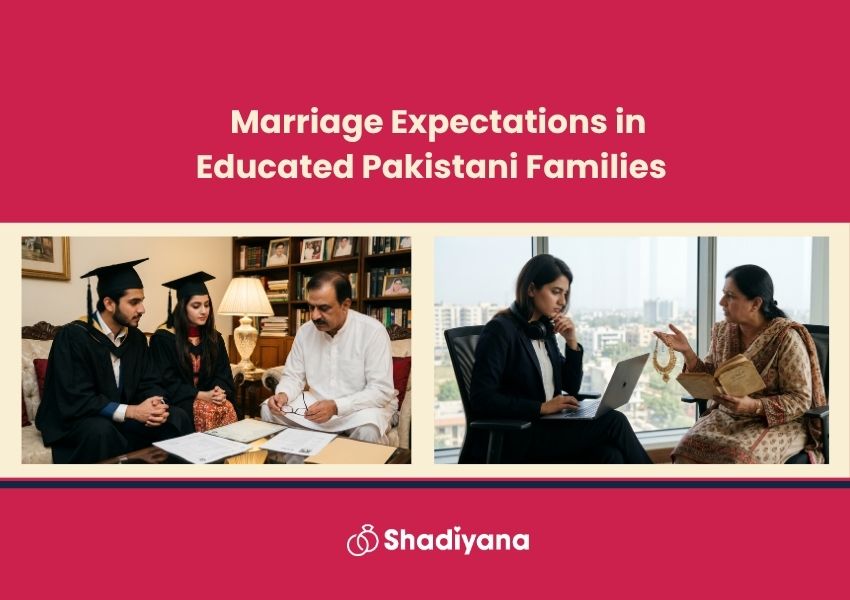
In educated Pakistani families, the concept of marriage is evolving. While traditional values still hold importance, there is a noticeable shift toward education, career stability, and personal compatibility.
Parents today often want well-educated partners for their children, believing that education brings maturity, better decision-making, and a stable future. However, along with these positive changes, new expectations and pressures have also emerged.
Marriage is no longer just about family background it is now a mix of education, career, personality, and long-term compatibility.
The Importance of Education
Education is now a major consideration in rishta decisions. Usually, parents want: same educational level well-known colleges professional qualifications mental level compatibility
The thought that educated people naturally have better understanding and communication between each other. Unfortunately, there are situations when the desire to have a degree comes in so strongly that the other aspects like emotional intelligence, character and various skills end up getting ignored.
Career and Financial Stability
In families where education is given importance, career becomes a key factor chaining with marriage.
While traditionally men were expected to be the breadwinners, many women in today's society contribute equally to the household finances. People still see financial stability as a must for men. Therefore, when assessing a potential groom, factors like steady employability, ladders of progress and professional image matter a lot.
Women on the other hand may have different sets of criteria at times. Parents can feel proud if their daughter is educated and has a career but may also want her to be able to do the household chores and be the homemaker after marriage.
It is a sort of dual role where success of women is encouraged however their adjustment is still expected.
The Balance Between Modern and Traditional Values
Educated families often wish to find a middle ground between the contemporary mindset and the traditional values. In one way, being open to: premarital communication mutual understanding career growth delayed marriages.
In another way, some elements of tradition are still kept, e.g: family participation in decision making, cultural compatibility, respect for elders and fixed gender roles. Sometimes this merge of the two can bring confusion to the person who has to live up to both sets of expectations, modern and traditional.
The Importance of Compatibility
Compatibility is one of the aspects on which educated families put more emphasis nowadays.
Besides background and social status, many families now take into account: attitudes and views, communication preferences, life aspirations and emotional empathy. It is a sign of a more rational attitude towards the institution of marriage where greater weight is given to peace and understanding over time as against initial attraction and looks.
The Rise of Expectations and Pressure
Educating people has raised their consciousness but at the same time their desire level has also been raised.
For instance, certain families might be looking not just for a match but for a "perfect match" educated, financially stable, good mannered, and from a respectable family background.
This obsession with flawlessness makes the rishta process longer and more nerve-racking at the same time. The individuals may find themselves forced to live up to the very high standards, and even the smallest deviations can cause rejection.
Delayed Marriages as a Result
In fact, the higher love standards alongside wise checking of wedding options and marriage get postponed in the families with the educated, as a result.
One needs more time especially for: finishing schooling, making professions, doing partner finding, ensuring relatives are willing. The delay can be a source of worry because society puts pressure however it usually brings about safer and wiser choices.
Changing Mindsets
On the other hand, the mentality change is happening slowly. Nowadays, more families: raise the young ones talking about the matter openly, support the career choices, consider respect among each other important, willing to have different life ways. This plays a big role in making the relations more stable and less antagonistic.
Conclusion
The marriage view of highly educated Pakistani families is a mixture of progressing thinking and old customs. Although getting an education and having a good job are becoming a primary concern, factors like being a couple happily, getting along well and showing each other respect stand equally high.
Setting higher expectations may cause the scenario to be of a higher degree of difficulty however they do also tend to bring up the best decisions. The secret is to check society and oneself.
It boils down to the fact that a happy marriage is not at all about fulfilling all the expectations but rather putting together a couple who understand, respect and share the same goals.