

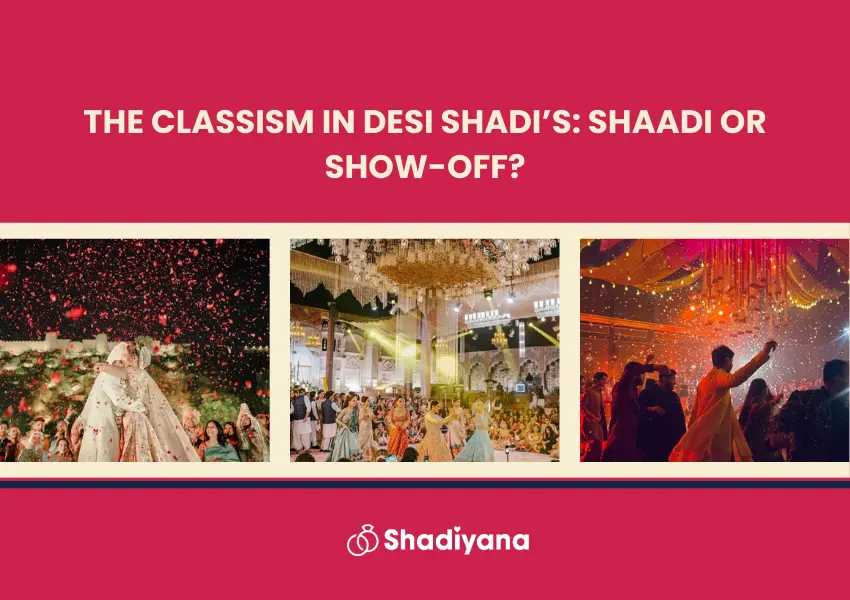
Let’s talk about the real shaadi culture in Pakistan, the unspoken competition of 1 crore ka venue aur 20 tolay ka gold set that nobody owns up to but everyone plays.
Weddings here aren’t just about two people getting married; they’ve become a public performance. The outfits, the decor, the seven-course menus, the Instagrammable entry walks… it’s like we’re all auditioning for “Best Wedding of the Year” in a movie no one actually wants to star in.
And don’t get me wrong, I love a good, gorgeous shaadi as much as anyone. But somewhere along the way, the celebration got hijacked by class anxiety. Weddings stopped being about love or even family. Now they’re about status. Who has the bigger venue. Who booked the “right” makeup artist. Who hired the celebrity singer. Who served lobster instead of seekh kebabs.
I’ve seen families take shaadi loans they can’t afford just to keep up with what the “log” are doing. I’ve seen brides cry on their mehndi day because a cousin wore a Sabyasachi. I’ve seen perfectly sane, financially stable people go broke because “how will it look if we don’t do XYZ?”
Here’s the uncomfortable truth: so many Pakistani weddings are less about love and more about showing off. And the tragedy is, no one will admit it out loud. We justify it by saying “once in a lifetime celebration” but deep down, we know what’s really driving it: log kya kahenge.
The problem isn’t just financial, though. It’s psychological warfare. Desi weddings are built to make you compare yourself, your lehenga, your budget, your menu, your photography, your everything. to someone else’s shaadi.
The rishtedaar gossip machine runs at full speed during the wedding season. If your decor isn’t “Instagram level,” someone will whisper. If you skipped the “premium” designer, someone will notice. If you didn’t serve seafood on the valima, well, congratulations, apparently your shaadi “looked cheap.”
Do you know what that does? It turns an intimate celebration into a classism Olympics, where your worth as a family gets judged by your shaadi’s aesthetic and expense.
And you know what’s worse? People borrow happiness debt too. We pressure brides and grooms into huge, performative weddings while ignoring the emotional mess behind them. Families get so busy curating Instagram moments that they forget to prepare the couple for, you know, actual marriage.
I know couples who were still fighting over catering bills months after the wedding. I know families who didn’t speak for years because someone didn’t get a front-row table. I know brides who wore designer lehengas worth lakhs but started their married life drowning in resentment because the shaadi was never really theirs.
So, here’s the thing: I’m not anti-big weddings. Have a destination shaadi in Turkey if you can afford it comfortably. Wear Sabyasachi. Book Rahat Fateh Ali Khan if that’s your dream. But for God’s sake, do it for yourself, not to outdo your phupo’s daughter’s shaadi from last year or in spite of your friend who lives abroad and comes from crazy generational wealth.
Because here’s the truth nobody wants to admit:
Once the food is digested and the guests go home, no one remembers your decor, no one remembers your dessert bar, and no one remembers whether your lehenga was Elan or local. The only people who remember are the ones who made you feel like you had to compete.
A shaadi should be meaningful, not performative. It should reflect you, not your family’s class aspirations. It should be a celebration, not a PR stunt. And if you’re sitting in a wedding planning meeting right now stressing about what “people will think,” maybe pause and ask: whose happiness are we really paying for here?
Because nothing, I mean nothing, kills the joy of a shaadi faster than turning it into a scoreboard.