

Introduction
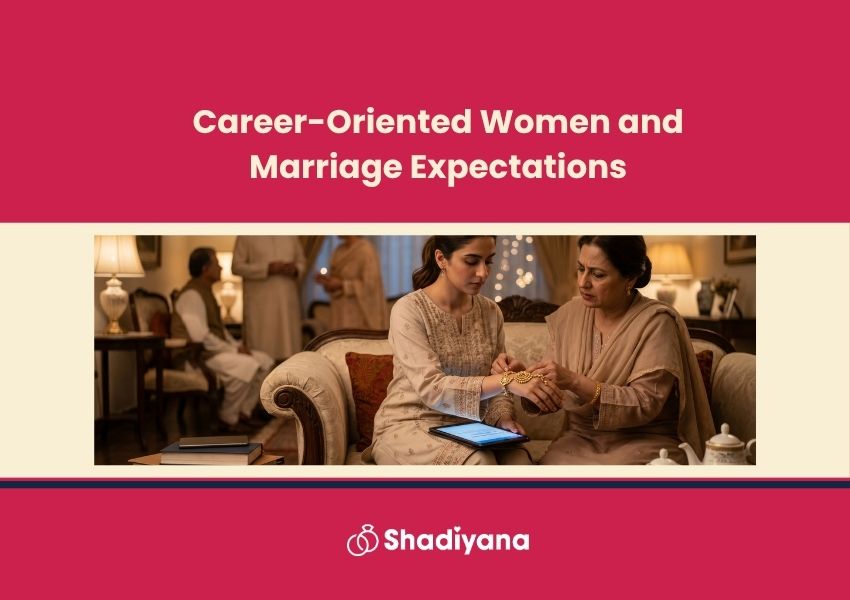
Many women nowadays want to complete their education, establish their career and financial independence before getting married. Women who are ambitious about their jobs are not only making successful lives for themselves but also helping their families and getting deeply involved in the workforce. Nevertheless, when it comes to the institution of marriage, the expectations of women often revert to a more traditional role.
Many women end up leading two completely different lives - on the one hand, being highly ambitious professionals and on the other hand, fulfilling social expectations in terms of getting married. Society admires the working woman but simultaneously expects her to somehow accommodate her job after marriage or choose household chores over job-related goals, that is the attitude of many people.
Because of that, career-oriented women face a dilemma as they have to deal not only with their career dreams but also with marriage expectations.
Changing Role of Women in Society
Over the years, the role of women in Pakistan and many other societies has evolved significantly.
Women are now doctors, engineers, entrepreneurs, teachers, and leaders in various fields. They are pursuing higher education, building careers, and becoming financially independent. This shift reflects a positive change where women are encouraged to grow professionally and contribute to society.
However, despite these advancements, traditional expectations around marriage still exist, creating a gap between modern realities and social mindsets.
Marriage Expectations from Career-Oriented Women
Career-oriented women are likely to encounter certain expectations during the rishta stage.
For example, they are usually expected to: take care of the house work keep their jobs and careers simultaneously conform to the family's wishes get married and have children become the ideal homemaker without grumbling
It is true that managing different responsibilities is a part of every marriage, however being expected to handle everything perfectly without any lapse can weigh heavily on one. In such situations, the conversation around the rishta often becomes more about finding a person who fits the stereotypical expectations rather than a truly compatible partner.
The Question of Career After Marriage
This is something career women worry about most: whether they would be allowed to continue working and/or get support from the family for the same.
The following questions are asked quite often during rishta talks:
Do you intend to work after marriage? Will you be able to manage your job and home equally? Are you okay with relocating and/or leaving your job?
So, these questions show how uncertain women are about their professional lives after tying the knot. In fact, encouragement from a spouse and the whole family can make a big difference in enabling women to juggle between career and marriage.
Social Pressure and Judgments
Career-oriented women also face social judgments that can make the process more stressful.
Some common perceptions include:
- “She is too focused on career.”
- “She might not adjust in marriage.”
- “Working women are difficult to manage.”
Such assumptions create unnecessary pressure and can affect marriage prospects.
In reality, being career-oriented often means being responsible, independent, and capable of managing challenges — qualities that can strengthen a marriage rather than weaken it.
The Importance of Understanding and Compatibility
Understanding and compatibility play a larger role in the success of a marriage than conformity to traditional norms.
If a woman is given space to have her career and ambitions, then a partner who supports her will have a positive and balanced relationship as a result. Before the couple gets engaged or nikkah, having open discussions about each other's goals, responsibilities, and expectations help them both be in a better position to make their decision.
Balancing Career and Marriage
Contrary to popular belief, balancing between career and marriage is quite doable; it only calls for understanding and cooperation on both sides.
Many couples who have been successful both in their career and family life have relied on:
dividing household chores honoring each other's work schedule encouraging one another's ambitions talking freely setting joint goals
Their relationship gets strengthened as both partners grow individually.
A Shift in Social Mindset
Slowly but surely, society is starting to accept the fact that a woman can have a career and still be married.
Nowadays, more parents are aware of the significance of education, being financially independent, and having a career. At the same time, couples are becoming more receptive to dividing work and having equal relationships.
The shift, although slow, is definitely towards a more encouraging and balanced outlook on marriage.
Conclusion
Career-focused women are likely to encounter a set of special difficulties in their pursuit of marriage, dealing with the pressure from society, as well as their professional goals. Juggling career and marriage demands from the partners an open communication, support, and mutual understanding.
Society should stop expecting women to give up their dreams and start recognizing the importance of their work and promote equal partnerships.
Ultimately, a thriving marriage is not about holding back one's career but being mutually supportive of each other's aspirations and developing a future founded on respect, understanding, and growth together.